Film friendships

From Thelma and Louise to Napoleon and Pedro, friendships have often been the motor that keeps a film moving.  Rodica and Rodica are another example of what an impact friendships can have on us.

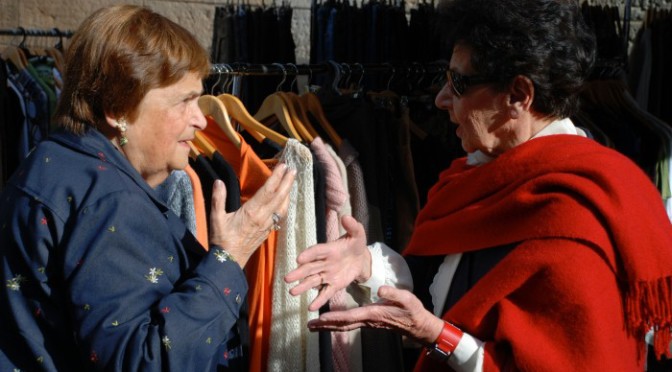
They can bring meaning to our lives and help us grow. They can stretch us further than we’re comfortable going, drive us mad and push us to take more risks. In each other’s company, the two Rodicas become youthful, jovial and giggly, borrowing energy from each other.

Here are some other memorable screen duos:

  • Mathilda and Leon in Leon
  • Frances and Sophie in Frances Ha
  • Pedro and Napoleon in Napoleon Dynamite
  • Romy and Michelle
  • Withnail and I
  • Thelma and Louise.

What screen friendship has rocked your boat and made you long for your bestie?

Book your tickets now.

Timeless and meditative – cinematography in Ida

In a film environment defined by fast pace, quick cuts, compulsive dialogue and music prompting our emotional responses, Ida’s stillness comes almost as a shock.  Apart from the last two scenes, the camera doesn’t move, and the scenes are one take, invoking a state of contemplation.

The important scenes do not arrive with bells, whistles or music to arouse expectations. The raw emotion comes unadorned, unannounced and hard hitting.

ida-without-nun-habit

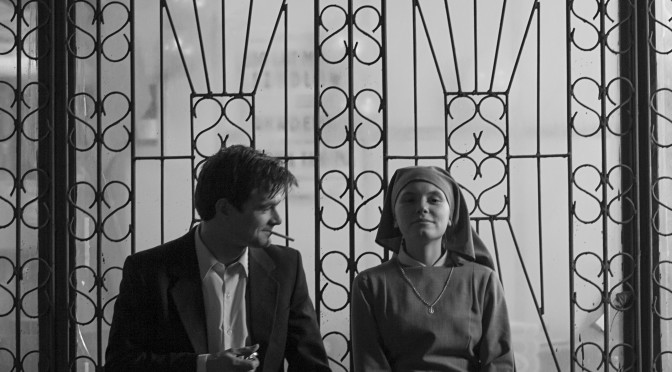
From the opening scene, the film is a continuous display of perfect frames, worthy of gallery spaces. Pawlikowski’s use of light and austere surroundings makes for a constrasting backdrop for Ida’s beautiful and innocent features.

Why black and white

There is no doubt that the choice of black and white adds to the severity of the film’s atmosphere. Pawlikowski says he imagined the 60s in black and white, and thought the monochrome limitations would better suit the film’s intentions: ‘a little abstract, timeless, more of a meditation than a story’, he says  in an interview with The Film Stage.

I wanted to limit the field of vision and information and to make people watch it in a different state of mind, to contemplate rather than follow a gripping story — hopefully it is quite gripping, too — but I wanted to give the audiences a certain state and it helped me to do it in black and white.

ida-band

Minimalist dialogue to match

The austere ambience is matched by minimalist dialogue. Pawlikowski’s use of dialogue is again, in contrast to what we usually see in mainstream films. There is no waste of words and scenes often start half way into a conversation, revealing only essential exchanges that advance the plot.

I don’t want to make a film that “tackles history,” God forbid. As soon as you start explaining, not only do you have bad dialogue because it’s full of exposition, but also it’s like a very partial explanation. In cinema, emotional truth and psychological truth is much more important.

ida-wanda

The characters in Ida don’t talk about what they feel or what they think. Pawlikoski trusts them and the story to relay emotion and his trust pays off.

With all these minimalist techniques, you might think that Ida is ‘stay away’ kind of film. Nothing could be further from the truth and there is a reason why awards and audiences flocked to it. Join us next Sunday at 2.30pm to see it. Get your pass now.


Save

Save

Save

Save

Save

Save

Save

Save

Save

Save

Save

Save

Pawel Pawlikowski – the ‘amateur’ director who won an Oscar

I predict that by the time you will finish reading this post, you will want to know more about Pawel Pawlikowski and see all his films. My own research led me into a Pawlikowski internet black hole. With every quote, he become more intriguing. He follows his nose and curiosities like few others. He never seems driven by commercial goals and he has been known to drop projects when he felt a film was out of his creative control.

‘I stayed an amateur who needed to live a bit in order to make films. I don’t need to be on the set and just keep churning out films. For me, each film, each script is like a little journey in itself, and I’m reinventing the wheel.’

He was born in Warsaw to a doctor father and a ballerina mother and immigrated to England with his mother when he was 14. As his character Ida, Pawlikowski grew up Catholic, to find out as an adult that he had Jewish relatives who died in Auschwitz. He took a directorial break when his Russian wife was diagnosed with cancer and later died. The following five years he spent teaching at the National Film School in  the UK and looking after his children before they graduated.

He is a not a stranger to acclaim. After his academic stint as an Oxford Brookes fellow, he started his filmmaking career as a documentary filmmaker in British television. He was awarded at Sundance and Toronto for his first feature, Last Resort. His next one, My summer of love, won a BAFTA for best British film, and gave Emily Blunt her acting break.

After his break, he returned to filmmaking with The Woman in the fifth, a failed biopic set in Paris staring Ethan Hawke. Ida started with the idea from the idea that he felt needed to go back to Poland.

‘I needed Warsaw because it’s so clearly shaped by history. It’s a place of simplicity and coherence. And that’s where I am in my life.’

Ida, of course, ended up winning many awards and recognition. But Pawlikoski almost seems to prefer it if it remained a small arthouse film that people engage with on its level. ‘Now it’s become a big political thing, because that’s what Oscar buzz does to people’s brains,’ he says when interviewed by The Atlantic magazine.

Is that enough to ignite your curiosity just a little bit? Let’s explore Pawlikowski’s beautiful film together on the 16 October. Buy your tickets now.


Ida explores ‘different versions of Polishness’

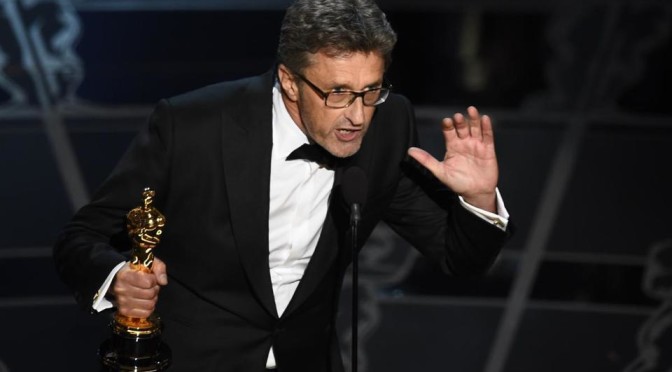
Ida has been described as a masterpiece, made it on the BBC list of  the 21st century greatest films, and won the first Oscar for a Polish film. Only a year after its release, it is becoming somewhat of a classic.

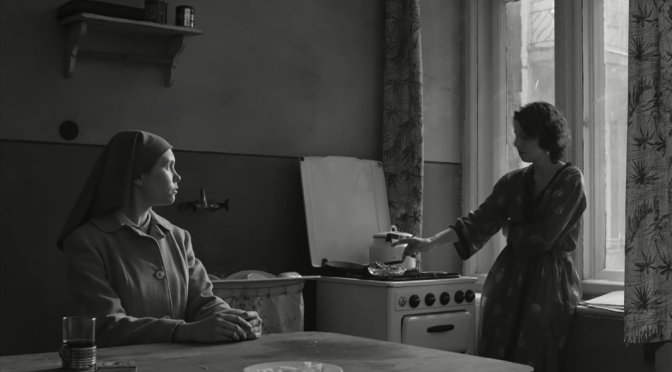
The film has at its centre an 18-year old woman about to become a nun in 1962 Poland. On the verge of taking her vows, young Ida discovers disturbing facts about her past. She meets her only living relative, ‘Red Wanda’, a woman who still bears the horrors of the war fresh in her mind. Ida’s known truths are challenged when she finds out her parents were Jewish and had been killed during the war. The unlikely couple, the saint and the sinner, take a journey into the past to discover what really happened to their family.

Ida explores a multitude of themes; faith, identity, lost ideals , jazz and rock and roll among them. Pawlikowski’s intention was to explore ‘different versions of Polishness’.

Director Pawel Pawlikoski himself was brought up in a traditional Catholic family, only to find out later in life that his paternal Jewish grandmother died in Auschwitz.  As an adult he met a priest who discovered his Jewish identity late in live. The character Wanda is inspired by a real life encounter with a former judge in post-war Poland. These narratives all came together in Ida.

When Pawlikowski told his friends he was making a black and white film, in Polish and set in Poland, his friends warned him of committing professional suicide. The risk certainly seems to have paid out.

Book your pass for Ida now.

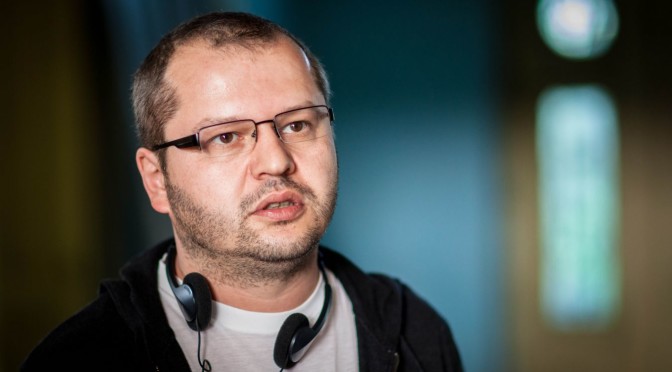
Corneliu Porumboiu – the director who makes waves

Corneliu Porumboiu, the son of a soccer referee, is one of the directors who defined the Romanian New Wave. Not often a director gets their first feature film awarded at Cannes Film Festival, but that’s what happened to Porumboiu. 12:08 East of Bucharest was the film that put him on the cinema map, but he certainly didn’t stop his explorations there.

Here are some of his films you might like to watch:

  • Police, Adjective – 2009
  • The Second Game – 2011
  • The Treasure – 2015.

What Porumboiu does best, without any judgement or pretense of owning ‘the truth’,  is ask important questions. You’re guaranteed to leave any of his films in a state of inquisitiveness.

What about this Romanian New Wave?

In the mid-2000s, Romanian cinema made a leap towards exploring and forging its new identity. Films in the Romanian New Wave are generally defined by minimalism and realism, with black humour a frequent feature. The international film community immediately responded by praising and awarding these films. And so the Romanian New Wave was born.

What makes a hero?

‘Everybody is a revolutionary in their own way,’  says Piscoci, the retiree in 12:08 East of Europe. In a plot determined to identify a specific type of hero, his reflection brings us back to the reality of everyday life, every day courage.

We think of heroes as courageous, brave, willing to make sacrifices without any personal gain. But can a hero be an ordinary person? If asked to think of the heroes in our own lives, we might think of a parent, a grandparent, a sibling, ordinary people that face live and adversities as best as they can.

What do you think makes a hero? Who are some of the people you consider heroes?

History live on TV

The Romanian revolution of 1989 was as much a live TV event as a street revolt, storming into people’s lives from behind the screens. Revolutionaries took refuge in the National Television building, where they broadcast through the noise of bullets the uprising happening on the streets. You could say it was reality TV, only of a different kind. No script, danger palpable, lives forever disrupted.

Every year around 23 of December, Romanian TV programs would scramble to unveil new facts, new heroes, new angles for understanding history.

Do you remember living through significant events glued to your TV, your life interrupted by on-screen events? Did you attend royal weddings and funerals, president inaugurations? Lived through Huricane Katrina? What world event did you participate in through your  TV screen?

Our next film, 12:08 East of Bucharest is the perfect cinematic tribute to the Romanian Revolution of 1989. Book your pass now.


Riding the Romanian New Wave in cinema

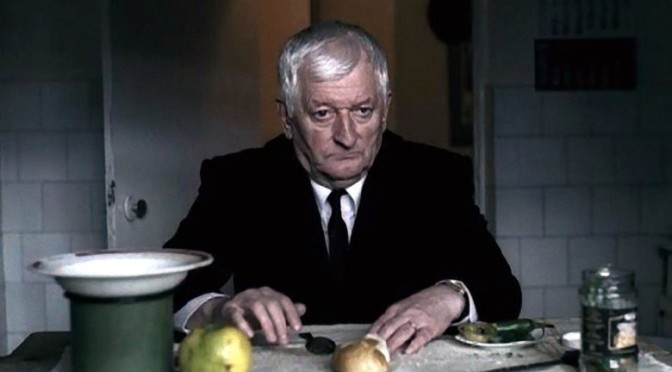
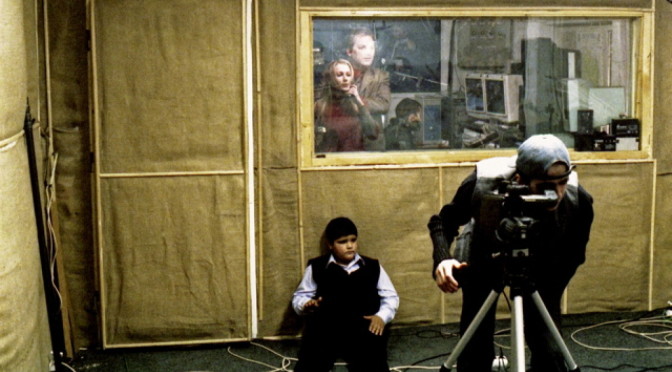
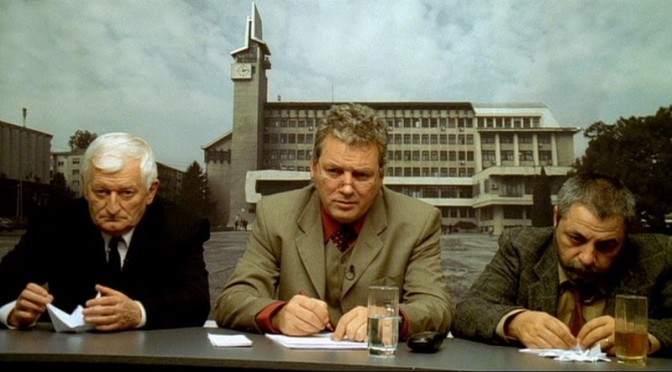
An alcoholic history teacher, a widower and a small town TV presenter walk into a television studio… that is the premise of our next EuRaw Stories film.

Corneliu Porumboiu’s 12:08 East of Bucharest is one of the first films that signaled the arrival of the Romanian New Wave in cinema (which continues to thrive with another win at Cannes this year).

At 12:08pm on 22 December 1989 dictator Nicolae Ceausescu was overthrown through a popular revolution. Hearing about the unrest on TV, people around the country flocked to the streets to protest against Ceausescu and support the uprising.

16 years after the revolution, the TV show host in 12:08 East of Bucharest is trying to find out if there was revolution in his town, if anyone went to the streets before the demise of the communist regime was confirmed on TV. ‘Was there or wasn’t there?’ is the literal translation of the film title.

Did anyone take to the streets before 12:08? And what about the ones that went after? Are they real revolutionaries or just followers?  The investigation into the past becomes more and more foggy and humorous as everyone recounts their own different version of  events.

The New York Times described 12:08 East of Bucharest as ‘acutely funny’. Do not be fooled by the grim grey streets and the moroseness of the characters, there is wise and gentle humour to be enjoyed in this film.

12:08 East of Bucharest screens on 18 September at Library at the Docks. Get your pass now.


Surprise guest at ‘Since Otar Left’ screening

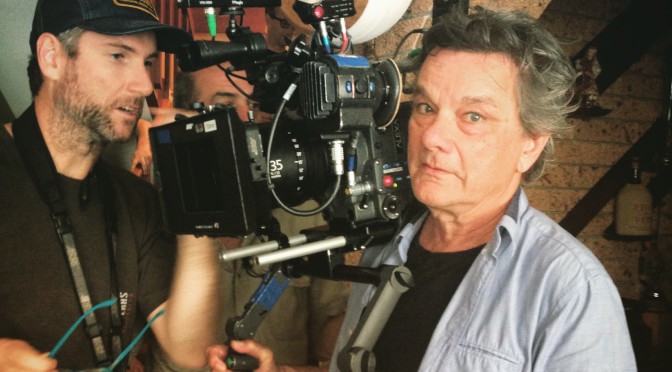
We’re very happy to have with us in the audience one of Australia’s best television directors, Geoffrey Bennet!

Geoff has set up and directed some of the most popular TV shows like Heartbreak High, Wildside, Water Rats,  Love My Way, Underbelly, All Saints, Rush, House Husbands, Love Child, and also launched Delta Goodrem’s acting career in Hating Alison Ashley, directed Jessica Mauboy in the soon to launch Secret Daughter and many other titles.

Hopefully we’ll have a chat to him after the screening. So come down in a few hours to The Dock – the weather’s bad so this is the best way to spend the afternoon!