
Proud to belong with Euraw Stories

Every March the most multicultural city in Australia celebrates its diversity with Multicultural Diversity Week and we are joining in again, this year with a screening of The Citizen.

The festival theme for 2018, proud to belong, acknowledges that belonging is an achievement that has its challenges for newly arrived people and encourages sharing and embracing everyone’s cultural heritage.

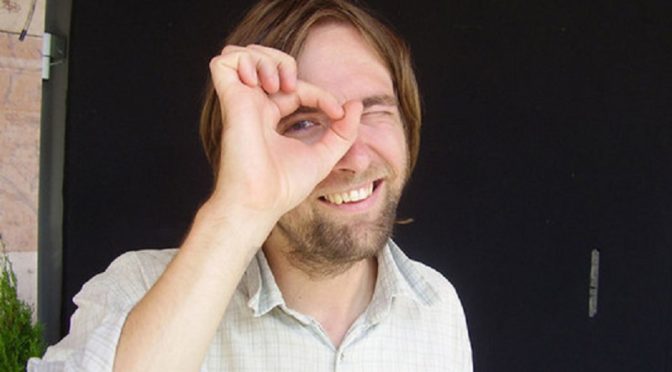
We chose The Citizen because Wilson, the main character, is the perfect person to take you behind the scenes on the journey of a refugee trying to make a new home for himself. After losing his whole family to war in Guinea-Bissau, Wilson hopes to become a model Hungarian citizen. The film follows the trials, failures and successes in his journey.

Wilson is played by amateur actor Dr Marcelo Cake-Baly, whose story mirrors that of Wilson. Cake-Baly himself became a Hungarian citizen in 1995, after arriving in Hungary in 1976.

There is painful honesty, sorrow, but also humour, romanticism and sensibility in The Citizen. Join us for the screening at 5pm on Saturday 17 March in the ever stylish Loop Project Space & Bar.

Browse the Diversity Week program.


The comforts of female friendship

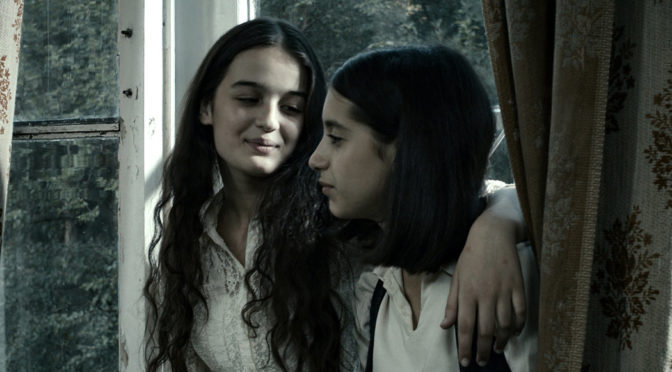
In Bloom is not the first nor the last story about female friendship in modern patriarchal cultures (Elena Ferrante’s Neapolitan novels come to mind), but our next EuRaw Stories film comes from a world most of us are not familiar with: Georgia during the civil war of the early 90s.

Filmmaker Nana Ekvtimishvili grew up in Tbilisi and the film emerged from memories of a childhood in the chaos of post-Soviet Union times.

First time actresses Lika Babluani and Mariam Bokeria are unlikely to leave you unmoved. There is a lot of ‘showing not telling’ throughout the film, which helps audiences connect with the two young women, guessing at complex emotions that even they seem to be just working out.

One scene screams out loud the reality of that world: while the two friends queue for bread one day, Natia gets ‘bride kidnapped’ ( a practice now illegal in Georgia, but still practiced in some parts of the world) by one her suitors, Kote. The impassive queuers mind their own business, which suggests this is the done thing and it doesn’t require special intervention.

The film doesn’t take sides. The focus is on the two female heroines, but everyone, including the matcho agressive young men, is a victim at the mercy of a tough, insecure and chaotic world, reinforcing the violence of these times, these parts.

There is so much poetry in In Blooms’s everyday, in the friendship between the two girls, in the stolen moments of laughter. All this is balanced with the ferocius energy of the  background, the regular reminders that this is not a peaceful world and its violence creeps into the quotidian scanes of family live or classroom attendance.

In Bloom screens this coming Sunday at 2.30pm at Library at the Docks. Get your pass to see it now.


What Pussy Riot did next…and why we should care

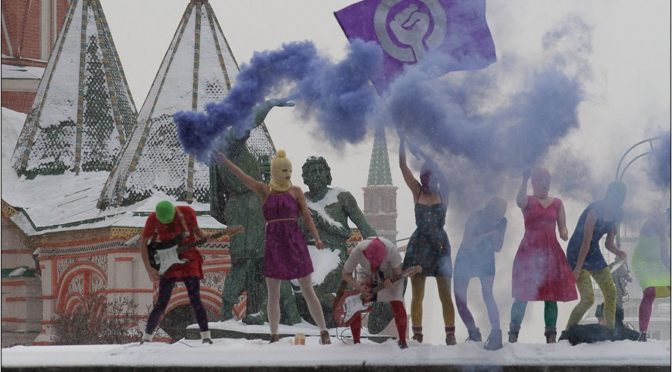
Art activism is not something that Pussy Riot invented a few years ago. But they certainly took it to new levels. If you think that the young Russian women were only after their fifteen minutes of fame, you’re probably wrong.

The former members of Pussy Riot have continued their politics of subversion with projects that advocate for freedom of expression.

And here is what they did next…

Zona Prava

Once out of prison, they formed an NGO, Zona Prava, to support the rights of prisoners in Russia. They provide legal information and support to Russian prisoners, to ensure transparency and humane conditions in the jutsice system.

Took the US by storm

PR and HillaryThey took their agenda internationally, and presented at the Women World Summit in New York in 2014. (Hillary Clinton was a fan and called them ‘brave and strong’). A few months later, they lobbied the US Senate for sanctions against human rights abuses in Russia. They then went to Harvard University to talk about their trial and the challenges of political activism in Russia.  They protested on the streets of New York and made a strong music video when Eric Garner’s died after a police officer illegally as an illegally chokeheld him.

Made Trump their next activism target

At the end of 2016, they released ‘Make America great again’, a song that satirises what the United States could become under Trump. Both Nadya Tolokonnikova and Masha Alyokhina (two of the Pussy Riot members who went to prison) have their writing published in Foreign Policy, The Guardian, and other prestigious publications. The world is taking them and their protest seriously.


In a place like Russia, art is politics, and Pussy Riot have refined that and brought it to the world. Pussy Riot and their protest are as relevant today as they were in 2012.

Join us for the documentary that explores the group’s roots and introduces you to its charismatic and highly driven members.

Get your pass now.


Russians still know how to revolt

One hundred years after the Russian Revolution, Russians still know how to do rebellion. Pussy Riot, a feminist art collective that came to existence in 2011, aimed for nothing less but to change the world they lived in.

In 2012, Pussy Riot was making headlines all over the world for performing Punk Prayer, an inciting anti-Putin song, in Moscow’s Cathedral of Christ the Saviour. The clever lyrics parody the Orthodox Church for campaigning for Putin, and call for Putin’s demise. The rest was history, as the Church and Putin didn’t quite appreciate the women’s artistic expression and arrested three of the group members. A few months later they were sentenced to prison for two years.

Behind bars, they continued to attract a lot of attention and support from all over the world.  Madonna, Sting, Red Hot Chilli Peppers, and many others all called for their release. Pussy Riot support concerts were taking place all over the world.

The three young women were released just a few months before their sentence term because of a government decree . Prison life didn’t do much to curve their revolutionary spirit. On the contrary, once released, the women were back to their revolutionary ways, and pledged to fight the political system in Russia.

Where are they now? Just this March, Masha Alyokhina was in San Francisco, performing in Revolution, a play based on the Pussy Riot church performance. Masha now warns Americans they are in for a Putin-like time with Trump at the wheel.

The film we are screening next week is Pussy Riot – A Punk Prayer, a documentary that chronicles the group’s beginnings, its rapid and controversial rise to fame, and the response to their arrest and trial.

Join us on Sunday 14 May at 2.30pm for a glimpse into contemporary Russian politics and artistic resistance. Get your tickets now.

Image: Copyright Denis Bochkarev

Not that kind of child’s pose

While the title of our next film focuses on child, the character at the centre of the film is very much the mother. And a mother’s love even more so, a love taken to extremes, larger than life.

Director Calin Peter Netzer’s own mother served as inspiration for his domineering character Cornelia, a mother who will stop at nothing to deepen her intimacy with her son and to protect him from harm.

Awarded the prestigious Golden Bear at the Berlin Film Festival, Child’ Pose is a drama that will keep you on the edge of your seat. Perfectly calibrated, it is lead by the feisty Cornelia, a successful architect used to making ruling decisions not only in her work, but in her life and that of her son too.

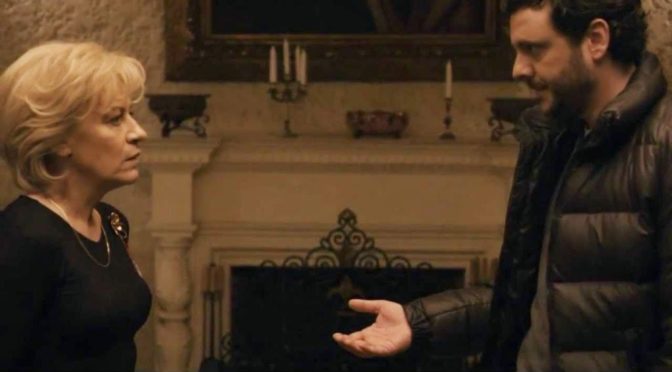
We meet her first as she is expressing her discontent at a man who doesn’t reward her with the attention and gratitude she expects. You could mistakenly think it’s a lover she’s talking about, but it is her son Barbu she is referring to, now a 30-year old who wants to live his life outside the influence of his mother.

But a tragic event brings them in interpendence again. Barbu is involved in an accident which leaves him vulnerable to his mother’s desire to control the situation. He runs over and kills a boy from a modest family. Despite all the evidence incriminating him, his mother is still convinced of his innocence and present him as an exemplary son to the bereft family, a powerful and meaningful scene.

What is certain is you will leave the film with a lot of questions about what a mother’s love means, when it is too much, when it crosses invisible limits.

Buy your pass now and join us for the screening on Sunday 9 April.


Special guest – visual artist Mirjana Margetic

This coming Sunday is going to be a treat: we don’t just have a fantastic film and an interview with its director, but also a very special guest: Geelong-based artist Mirjana Margetic.  Mirjana migrated to Australia from Serbia in the early 90s and since then she has made a name for herself as an artist, daringly exploring questions of identity and connection between nature and the feminine.

On Sunday she will talk to us about What shapes my identity today: the history of Serbian migration in Victoria, the book that she  edited, bringing together stories of migration from Serbia to Australia. She will share some of those stories during her talk, exploring the painstaking journey of starting out again on the other side of the world.

Her latest exhibition, ‘Female Ancestry — A life of the cloth, capture and recover’, is a reflection on women’s identity through a variety of media, including recycled fabrics and needlework. You’ll get to see some of her exquisite artwork on the screen on Sunday.

So book your pass if you haven’t yet, for a real feast of a Sunday afternoon, celebrating our rich multicultural identity.

The event will start at 2.30pm, with Mirjana Margetic’s talk, followed by the Open cage screening, and a brief q&a with Sinisa Galic, the film director.


‘We are all connected’

This is the message that director Sinisa Galic wants to send with his film Open cage, our screening choice for diversity month. This Sunday we invite you to find out if he succeeds.

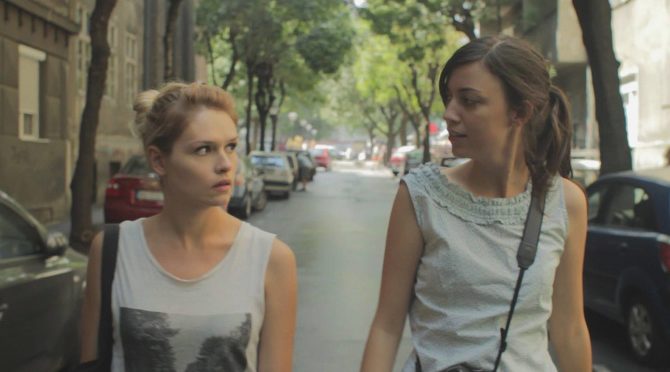
The film mixes characters and perspectives from the East and the West: a young photojournalist from Berlin meets a young woman from Belgrade, who dreams of a better life abroad. Beyond their apparent differences, the two young women also have things in common, and the film strives to illustrate this shared humanity. They are both searching for something, a search that their background and history dictates.

‘We are all kind of connected, even if we think we are opposing. We have to be conscious of the similarities between us,’ says Sinisa Galic in an interview with Sabisa Paisa last week.

The connectedness we see on screen was mirrored in the film crew on set, with a team of over 40 people from different countries: Germany, Serbia, Slovenia, Bulgaria, Turkey and USA working on it.

Book you pass now and join us to celebrate Harmony Week with a film.


March is all about diversity

This March we are partnering with the Victorian Multicultural Commission to celebrate Cultural Diversity Week.  Every March Victorians celebrate living in the most multicultural state in Australia and this year we’re on board with the proceedings.

Euraw Stories is all about fostering the cultural richness that comes with diversity and we jumped at the chance to celebrate it with everyone else.  For the occasion we are screening Open Cage, the story of a German photojournalist who travels to Serbia, where she connects with a refugee, Maja.

Book your tickets now. Don’t forget that if you buy a yearly pass, you can bring a friend to the screening for free.


So who is Gyula Nemes?

A simple Google search reveals a daring director who has had a good share of industry awards and critics’ attention. But that’s not the whole story about Gyula Nemes.

A few films into his career, and Nemes is positioning himself as a rebel child of Hungarian cinema. In terms of his films, but also in terms of his views and statements.

He is no stranger to choosing hot issues to focus on. His short film The Lost World (was awarded at Karlovy Vart, Hamburg and Navarra) is a documentary about people living in houseboats and wooden houses, in danger of being evicted by investors. Nemes shot the 20 minutes doco over 10 years.

His latest film, Zero, released in 2015, imagines a near future where the imminent extinction of bees brings havoc among humans. It is an explosive experimental film, with a clear political agenda. As such, some scenes offended one of the funding bodies, the Hungarian Film Fund. Nemes had to concede to deleting them, but not without making it all public.

The incident, he confessed in an interview with the Hollywood Reporter, paired with recent political developments, are making him reconsider his future as a filmmaker in Hungary.

‘I don’t want to live in a country where there is an Iron Curtain. I want to live in a free country,’ said Nemes to the Hollywood Reporter interviewer.

But you can hear straight from the horse’s mouth this Sunday when we’re screening his latest film Zero.  As the time different didn’t allow for a live interview, Sabi Paisa is preparing a Skype interview with Gyula Nemes which we will play for you.

So book your tickets for Zero through Sustainable Living Festival now, or buy a EuRaw Stories pass.