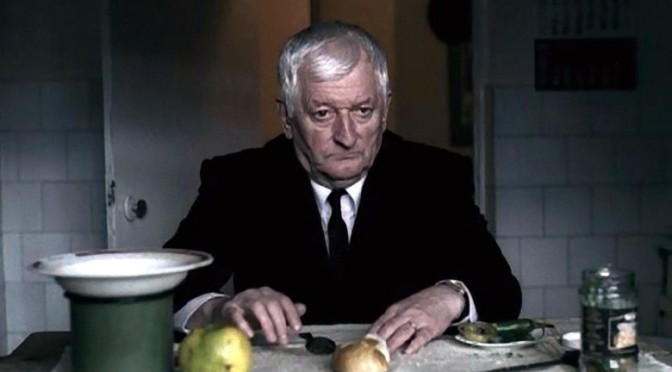
‘Everybody is a revolutionary in their own way,’ says Piscoci, the retiree in 12:08 East of Europe. In a plot determined to identify a specific type of hero, his reflection brings us back to the reality of everyday life, every day courage.
We think of heroes as courageous, brave, willing to make sacrifices without any personal gain. But can a hero be an ordinary person? If asked to think of the heroes in our own lives, we might think of a parent, a grandparent, a sibling, ordinary people that face live and adversities as best as they can.
What do you think makes a hero? Who are some of the people you consider heroes?
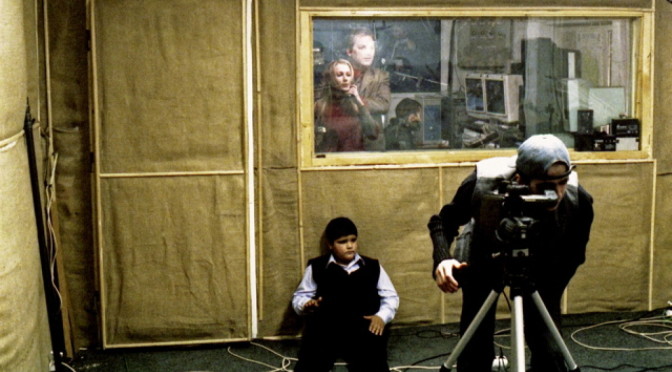
The Romanian revolution of 1989 was as much a live TV event as a street revolt, storming into people’s lives from behind the screens. Revolutionaries took refuge in the National Television building, where they broadcast through the noise of bullets the uprising happening on the streets. You could say it was reality TV, only of a different kind. No script, danger palpable, lives forever disrupted.
Every year around 23 of December, Romanian TV programs would scramble to unveil new facts, new heroes, new angles for understanding history.
Do you remember living through significant events glued to your TV, your life interrupted by on-screen events? Did you attend royal weddings and funerals, president inaugurations? Lived through Huricane Katrina? What world event did you participate in through your TV screen?
Our next film, 12:08 East of Bucharest is the perfect cinematic tribute to the Romanian Revolution of 1989. Book your pass now.
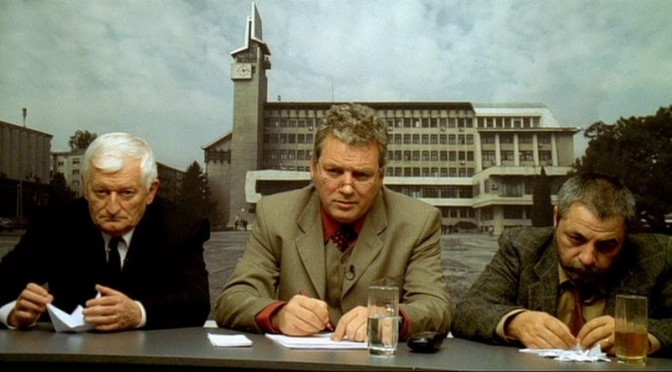
An alcoholic history teacher, a widower and a small town TV presenter walk into a television studio… that is the premise of our next EuRaw Stories film.
Corneliu Porumboiu’s 12:08 East of Bucharest is one of the first films that signaled the arrival of the Romanian New Wave in cinema (which continues to thrive with another win at Cannes this year).
At 12:08pm on 22 December 1989 dictator Nicolae Ceausescu was overthrown through a popular revolution. Hearing about the unrest on TV, people around the country flocked to the streets to protest against Ceausescu and support the uprising.
16 years after the revolution, the TV show host in 12:08 East of Bucharest is trying to find out if there was revolution in his town, if anyone went to the streets before the demise of the communist regime was confirmed on TV. ‘Was there or wasn’t there?’ is the literal translation of the film title.
Did anyone take to the streets before 12:08? And what about the ones that went after? Are they real revolutionaries or just followers? The investigation into the past becomes more and more foggy and humorous as everyone recounts their own different version of events.
The New York Times described 12:08 East of Bucharest as ‘acutely funny’. Do not be fooled by the grim grey streets and the moroseness of the characters, there is wise and gentle humour to be enjoyed in this film.
12:08 East of Bucharest screens on 18 September at Library at the Docks. Get your pass now.
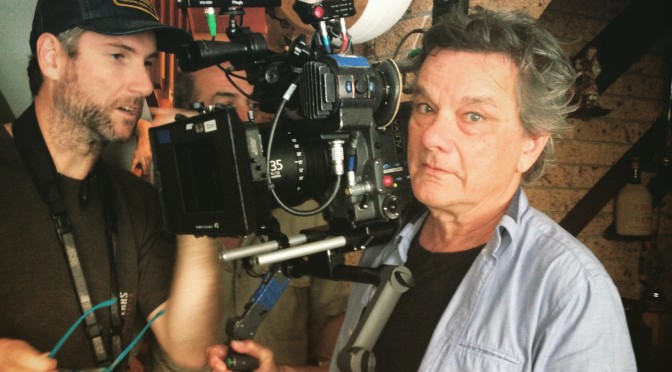
We’re very happy to have with us in the audience one of Australia’s best television directors, Geoffrey Bennet!
Geoff has set up and directed some of the most popular TV shows like Heartbreak High, Wildside, Water Rats, Love My Way, Underbelly, All Saints, Rush, House Husbands, Love Child, and also launched Delta Goodrem’s acting career in Hating Alison Ashley, directed Jessica Mauboy in the soon to launch Secret Daughter and many other titles.
Hopefully we’ll have a chat to him after the screening. So come down in a few hours to The Dock – the weather’s bad so this is the best way to spend the afternoon!
Every year Melbourne International Film Festival takes us on a journey around the world. The festival opens tonight so here’s our top 5 Eastern European picks for this year:
1. Graduation (Romania 2016) directed by Palme D’Or winner Cristian Mungiu, and the director of the short film Turkey Girl screened at Euraw Stories with the collection Lost and Found. Graduation won him best Direction at Cannes Film Festival this year. The film is a suspenseful thriller about a middle aged doctor who takes matters into his own hands when his teenage daughter is sexually assaulted in the eve of passing her exams on her way to Oxford. (select English subtitles when watching this trailer)
https://www.youtube.com/watch?v=VimmuogOOks
2. I, Olga Hepnarova(Czech Republic 2016). Olga Hepnarova was the last woman executed in the former Czechoslovakia. In 1973, at the age of 22, Hepnarova ran down eight people on a Prague sidewalk. It was a ferocious crime whose subsequent trial shocked a nation. But who was Olga Hepnarova? What caused her to cross such a dangerous precipice? How did she become, in her own words, “a wreck, ruined by people”? (one session is already sold out and the other one is selling fast – select English subtitles when watching this trailer)
3. 11 Minutes (Poland 2015) acclaimed director Jerzy Skolimowski has won over his half a decade of activity awards at the most renowned film festivals. He has a reputation for creating eccentric films; 11 Minutes might just be his most ambitious work yet. Described as a ‘highly entertaining thriller and an exercise in startling cinematic invention – taking detours into extreme slow motion, distorted lens and a dog’s eye view’. The film seems to be unlike anything in its genre. (another selling fast film)
4. A Good Wife (Serbia 2016) Well known actress Mirjana Karanovic has taken the leading role of the film she co-wrote and directed. A human rights activist, Karanovic brings genuine warmth, insight and touches of gentle humour to the film – both in front of and behind the camera. It’s a subtle and intimate character study that’s both courageous and compassionate about the present times Belgrade and its people dealing with a past troubled by war and violence.
5. The Lure(Poland 2016) directed by 1st time Agnieszka Smoczynska, this is the winner of the Special Jury Prize for World Cinema at Sundance Film Festival. This looks like an outrageous musical/ zombie/ fantasy/ comedy described as if the people behind Eurovision were tasked with turning The Little Mermaid into a 1980’s vampire flick.
We hope to see you there. And don’t forget to mention to those around you about Euraw Stories!
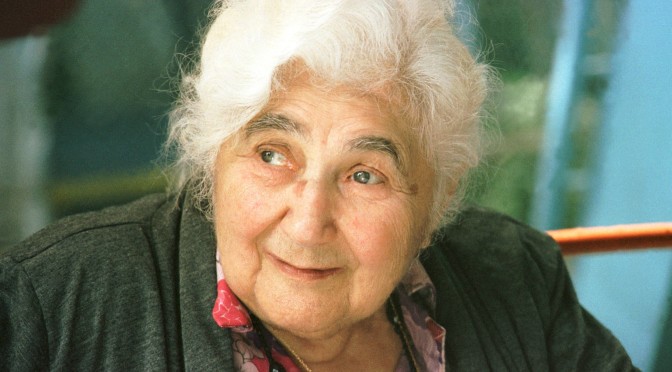
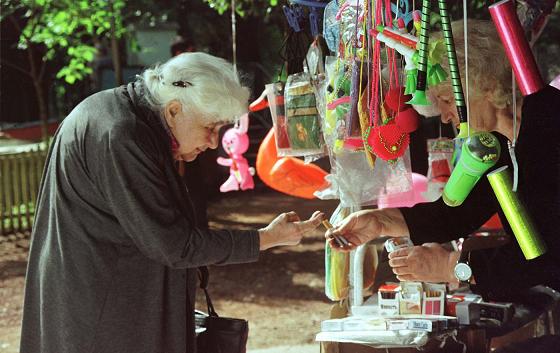
…to start a new career or follow a dream. Like starting to act at 85, which is what Esther Gorintin (aka Eka in Since Otar left) did.
‘All three actresses are wonderful, but…the best actress currently on New York screens is Esther Gorintin, a 90-year-old Pole who provides the emotional centre for Julie Bertucceli’s delicate, bittersweet comedy-drama.’ So raved The New York Post when they set their eyes on Esther. And their praise was mirrored by many other critics.
Reading these reviews, it’s hard to imagine Esther hasn’t been acting her whole life. Make up your mind about Esther’s acting skills tomorrow at our 2.30pm screening.
Maybe you’re wondering why we’re screening a Georgian film, when geographically, Georgia might not be part of Europe at all. Most Georgians themselves like to think it is.
We thought there are enough cultural similarities to warrant its presence in our program. Georgia was part of the former Soviet Union alongside other Eastern European countries, it has a diverse and multicultural population, and yes, it also displayed clear signs of that fascination with the West.
Unrelated but note-worthy, Georgia gave the world comrade Stalin, a figure still strangely revered by its co-nationals, maybe as a claim to fame. Rumour has it you can still drop by any local market in Tbilisi and pick up Stalin memorabilia.
One thing most Eastern European countries shared, especially during Soviet times, is a wide-spread fascination with the West. In the absence of free access and real interactions with it, Eastern Europeans would often see it as a promised land, any connection with it treasured, any relative who lived in the West revered.
Even before the Iron Curtain made Western Europe hard to access, Eastern European aristocracy in 19th and early 20th centuries spoke French in social circles. If you wanted to appear sophisticated and make an impression, conversing in French might have done the trick.
Watch out for all the clues director Julie Bertuccelli sprinkles throughout the film to suggest how characters idealise France.
Don’t even dream about being completely honest with your loved ones, urged philosopher Alain de Botton earlier this week at the Melbourne Town Hall.
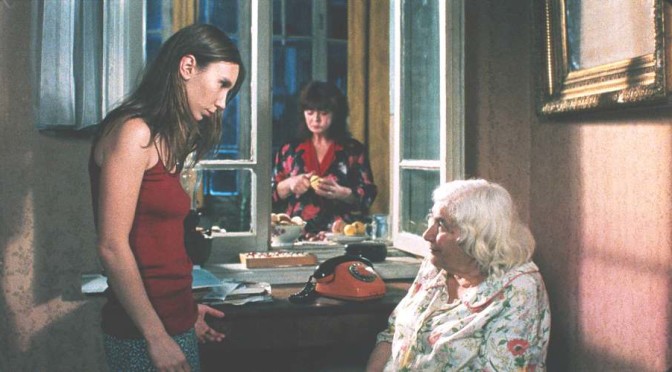
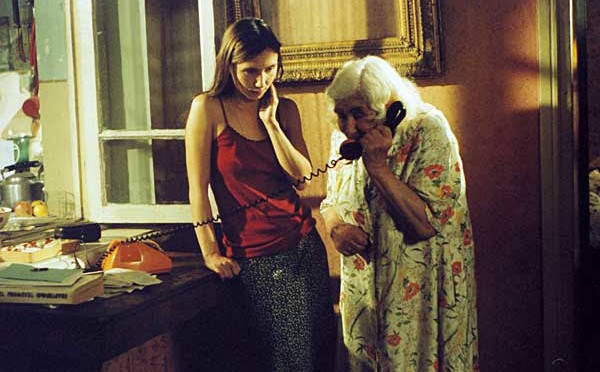
Since Otar Left is a perfect example of lies becoming a little… complicated. The three characters live in Georgia, a former Soviet republic where lies and deceit had long been a way of life. But here they lie to protect each other from life’s tragedies and disappointments. When her brother Otar dies in an accident in Paris, Marina keeps the truth from her mother to save her the heartbreak in her old age. But a complicated lie is never so easy to keep up and it affects everyone involved.
This is a film that will question your known truths and values in the best possible way. And isn’t that what we need art for?
So go on, tell us what you would lie to your loved ones about?