This Saturday at EuRaw Stories: Balkan delicacies
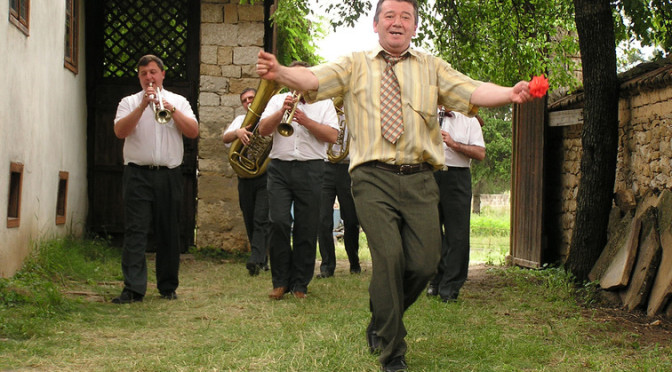
We have a special treat for you on Saturday: traditional Balkan delicacies from Grannys Burek. This is your chance to try recipes sourced from Bugojno to Zagreb and baked by a Bosnian baker in Melbourne.
Words you’ll add to your vocabulary after Saturday: burek, kiflice, slanci and sweet apple pita. Be there to try them all, delicious and freshly cooked for you.
See you on Saturday then. 2.30pm at Library at the Docks.
From book to blockbuster
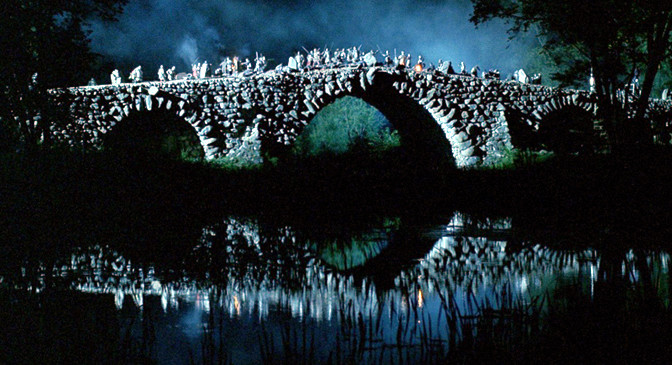
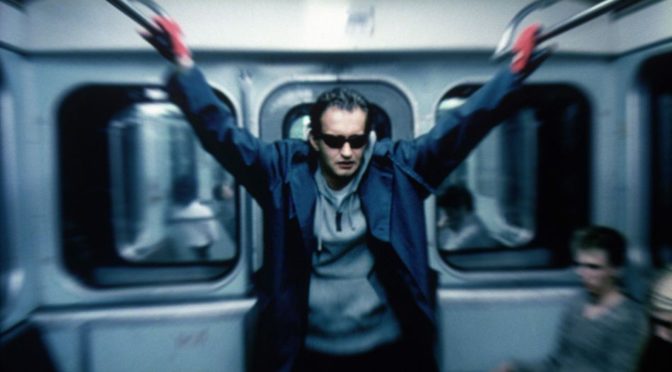
A former psychiatrist wrote a fantasy trilogy, which became a film, which became the first blockbuster in Russian film history.
Originally a psychiatrist, Sergei Lukyanenko always wanted to write a fantasy novel set in modern times.
I’d been eager to write fantasy for quite some time… Then, I had an intriguing notion: this idea of the Night as a battlefield for magicians who live in hiding among us ordinary people and can only fight when it won’t disturb humanity.
Before the film was made, Night Watch was part of fantasy series with a serious following, with 500,000 copies sold. Since the feature film, the trilogy went on to sell another 2.5 million copies.
What made the film such a success?
To translate the trilogy into a visually powerful film, the producers brought on board someone with a close understanding of the Russian soul, and familiar to modern special effects filmmaking: Timur Bekmambetov, an acclaimed creative powerhouse in the fields of commercials and music videos.
‘Timur is highly visual, and he also goes very deep with the characters, in a Stanislavski way,’ says producer Anatoly Maximov.
Bekmambetov is influenced by modern Hollywood masters of action, filmmakers such as Quentin Tarantino, James Cameron, or Ridley Scott.
Director and writer worked together to bring the story to life for the screens. Lukyanenko responded very well to suggestions, even adding a subplot to add drama and relatability to the story.
‘In reading the book, I suddenly realised Sergei had managed to distill magic and miracles, the transcendent and the supernatural, into our way of life. I found that the story really was something special because in it, fantasy not only meets reality ” but Russian reality’, says Bekmambetov.
With a budget modest by Western standards, Bekmambetov imitated a big budget and the results are impressive. Join us for the free screening next Saturday at 2.30pm.
Party like it’s Eastern Europe
Important diary entry: EuRaw Stories closing party next Saturday 3 December (after the screening at 2.30pm), at Library at the Docks in Docklands.
For next Saturday’s event we have planned much more than just a film screening. We intend to celebrate our first year of Eastern and Central European film in Melbourne with a party to remember. We would hate for you to miss it.
Here’s what we thought you might enjoy:
- a Russian blockbuster to transport you across the continents to Moscow
- heartwarming Eastern European fare and drinks
- dance-inducing rhythms to cure any non-dancer
- lovely people to chat to, hug and befriend.
How is that for a Saturday afternoon offer? Do we have a yes?
Join us for Night Watch followed by our closing party.
Russia’s break into blockbuster territory
‘We’re not producing a film, we’re producing an event, said director Timur Bekmambetov about Night Watch (Nochnoi Dozor), the stylish fantasy film that revolutionised post-Soviet cinema.
Night Watch came at a time when Russian audiences were hungry for home-grown film fare, with settings and plots they could relate to.
”People got tired of seeing movies filmed in New York, which seemed exotic and which presented no context for their daily lives,” said Konstantin Ernst, the film producer.
The few Russian films made in the 90s were generally art-house small productions financed by wealthy businessmen. Mass audiences still didn’t get their film fix.
The producers of Night Watch had a Hollywood-style hit in mind. They hired a leading pop director and poured money into special effects. The resulting film got even the hard-to-impress film critics’ attention. Audiences flocked to the cinemas in an unprecedented wave, making it the biggest grossing film of all time at the Russian box office, taking 464m roubles (£9.16m).
Set in modern day Moscow, Nigh Watch was adapted from a series of fantasy novels by former psychiatrist Sergei Lukyanenko. The plot focuses on the fight between beings with supernatural powers: Good Others use their abilities to heal and help, evil Others use their powers for violent, selfish ends.
“The battle between good and evil was very important to the [film’s] appeal. We had a strong Communist ideology for 70 years, then it crashed, and now we are creating a new infrastructure. And this story…helps create that,” says director Bekmambetov.
The cinematic style of Night Watch has been compared to Blade and Gorky Park, and its cult following to The Matrix, Star Wars, and The Lord of the Rings.
Join us at 2.30pm next Saturday, 3 December, as we screen the film that changed the course of the Russian film industry.
Entry is free for all and we have planned much more than just a screening. Party Eastern European style with our team and all our film club members.
Alice Gruia in conversation
What would you ask Alice Gruia, the filmmaker of Rodicas, if you had the chance to? Get your questions ready because she’s joining us on Sunday via Skype.
Alice Gruia will join us for an intimate conversation this Sunday after the screening. The filmmaker will connect via Skype from Germany to chat about her experience of directing Rodicas.
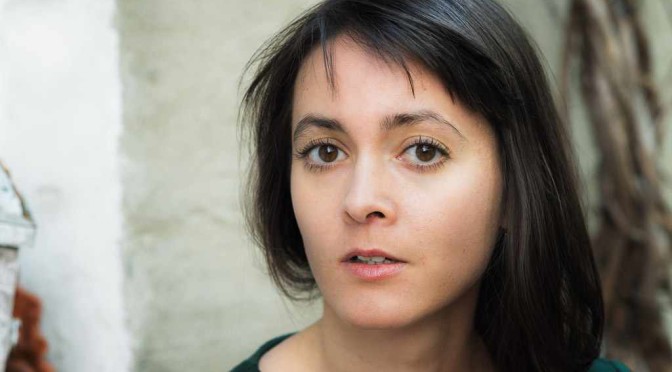
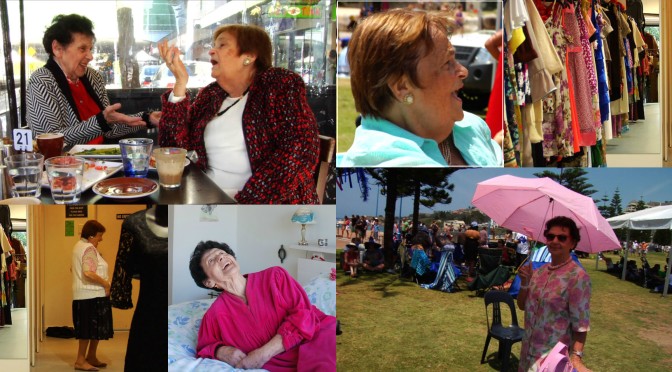
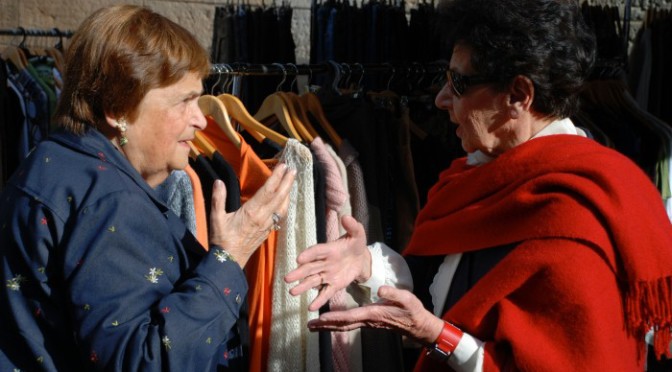
Alice Gruia is a German actor, writer and director with Romanian roots. Her award-winning documentary, Rodicas, features two octogenary best friends, one of which is her own grandmother.
This is the perfect opportunity to look closer into the process of directing a documentary, removing sentimentality, and extracting a story that anyone can identify with.
You will need to be at the screening for that, so if you haven’t already done so, book your pass for Sunday now.
Year in review
It has been a great first year of EuRaw Stories. Thank you for accepting our invitation and immersing yourself in the other Europe and making our vision possible.
As a non-profit organisation, we want to invite all our pass-buying members to our annual general meeting this Sunday. Share your thoughts about how we can make EuRaw Stories bigger and better. Your contribution is important to us.
Join us after this Sunday’s screening for a review of our first year and planning ahead for more EuRaw Stories goodness.
How to depict old age without sentimentality
Older characters can often be cliched in films: cranky and sentimental for the old times, almost inviting sympathy from audiences. Not in Rodicas. The two octagenarians don’t have time to feel sorry for themselves.
Director Alice Gruia didn’t want to have her two protagonists sitting down with a photo album, reminiscing times long gone. The two women are on the move, they have an active life going for coffees, walks on the beach, cultural events. Their conversation topics vary from sex and gin to career and philosophy.
I was more interested in how they are right now. I was talking a lot about how they see themselves, if they’re bothered about being old, looking old, when it was that they stopped thinking ‘I am attractive’.
Throughout the film, you’re likely to find yourself in awe of the characters’ youthfulness, energy and fun spirit. How do they do it?
There’s a lot to be said about films that give us a new perspective on aging. There is good and bad in getting old, but perhaps the good doesn’t get enough of the limelight. Let the two Rodicas show you how it’s done.
Film friendships
From Thelma and Louise to Napoleon and Pedro, friendships have often been the motor that keeps a film moving. Rodica and Rodica are another example of what an impact friendships can have on us.
They can bring meaning to our lives and help us grow. They can stretch us further than we’re comfortable going, drive us mad and push us to take more risks. In each other’s company, the two Rodicas become youthful, jovial and giggly, borrowing energy from each other.
Here are some other memorable screen duos:
- Mathilda and Leon in Leon
- Frances and Sophie in Frances Ha
- Pedro and Napoleon in Napoleon Dynamite
- Romy and Michelle
- Withnail and I
- Thelma and Louise.
What screen friendship has rocked your boat and made you long for your bestie?